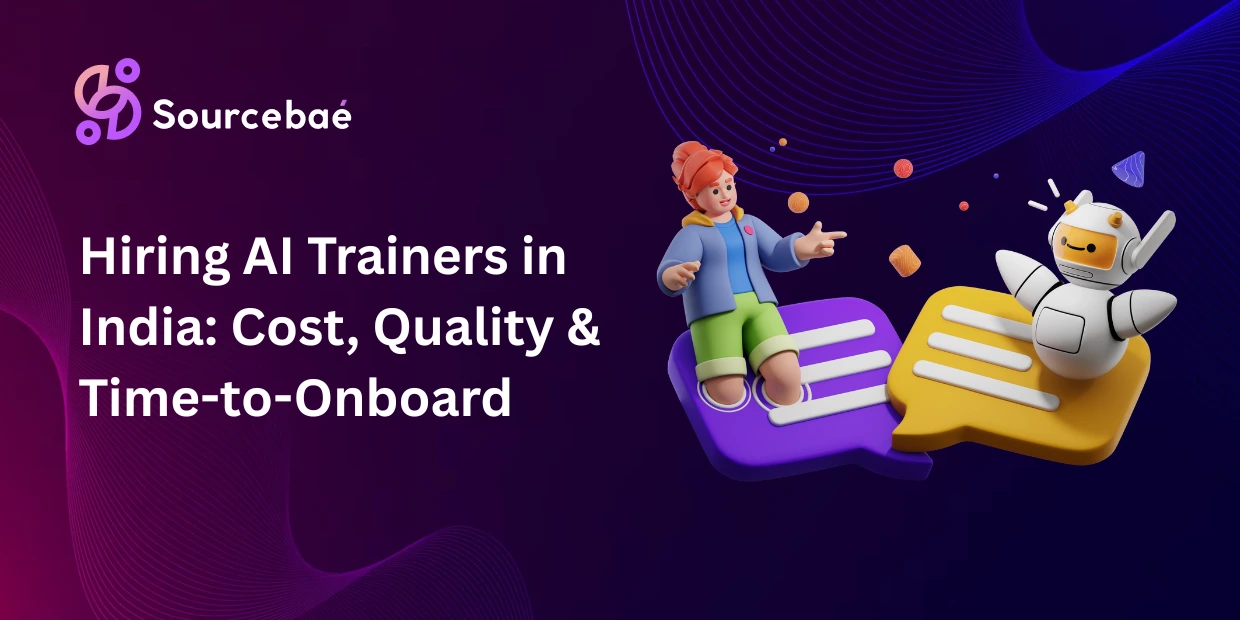

The global AI industry is experiencing unprecedented growth, and with it comes an insatiable demand for specialized talent. Among the most sought-after professionals today are AI trainers the experts who teach machine learning models to understand context, generate accurate responses, and align with human values. As companies worldwide seek cost-effective yet high-quality solutions, India has emerged as a powerhouse for hiring AI trainers.
But what does it really cost to hire AI trainers in India? How quickly can you onboard them? And most importantly, can you maintain quality while optimizing your budget? This comprehensive guide explores everything you need to know about hiring AI trainers in India, from cost structures and quality benchmarks to onboarding timelines and best practices.
Understanding the AI Training Landscape in India
India’s position as a global technology hub extends far beyond software development. The country now boasts a thriving ecosystem of AI training talent, encompassing AI data trainers, RLHF trainers, and LLM training specialists who work on cutting-edge language models and machine learning systems.
What Does an AI Trainer Actually Do?
Before diving into costs and logistics, it’s essential to understand the role. An AI trainer in India typically performs several critical functions:
Data Annotation and Labeling: AI data trainers meticulously label datasets images, text, audio, or video creating the foundation for supervised learning models. This work requires domain expertise, attention to detail, and understanding of annotation guidelines.
Reinforcement Learning from Human Feedback (RLHF): RLHF trainer India specialists evaluate AI model outputs, rank responses based on quality and relevance, and provide feedback that helps models learn human preferences. This is particularly crucial for conversational AI and large language models.
Model Testing and Evaluation: AI model training experts India assess model performance across various scenarios, identifying edge cases, biases, and areas requiring improvement.
Prompt Engineering and Red Teaming: Advanced trainers craft challenging prompts to test model boundaries, uncover weaknesses, and ensure AI systems respond appropriately to diverse inputs.
Quality Assurance: The AI annotation team India maintains consistency across training datasets, ensuring that annotations meet project specifications and quality standards.
The True Cost of Hiring AI Trainers in India
One of the most compelling reasons companies choose to hire AI trainers in India is cost efficiency without compromising quality. However, understanding the full cost structure requires looking beyond simple hourly rates.
Breaking Down AI Trainer Costs
The cost of hiring AI trainers in India varies significantly based on experience level, specialization, and engagement model. Here’s what you need to know:
Recruit the top 1% of AI Trainers today!
Access exceptional professionals worldwide to drive your success.
Entry-Level AI Data Trainers: For basic annotation and labeling tasks, entry-level trainers typically cost between ₹15,000 to ₹30,000 per month ($180-$360 USD). The AI trainer hourly rate India for this tier ranges from ₹100 to ₹200 per hour ($1.20-$2.40 USD).
Mid-Level RLHF and LLM Trainers: Professionals with 2-4 years of experience in reinforcement learning or language model training command ₹40,000 to ₹80,000 monthly ($480-$960 USD). When calculating how much does an AI trainer cost in India at this level, expect ₹250 to ₹500 per hour ($3-$6 USD).
Senior AI Model Training Experts: Specialists with deep domain expertise, advanced degrees, or experience with specific model architectures can cost ₹80,000 to ₹1,50,000 per month ($960-$1,800 USD). The AI trainer rate per hour India for senior professionals reaches ₹600 to ₹1,000 ($7-$12 USD).
Specialized Domain Experts: For projects requiring medical, legal, or technical domain knowledge, AI trainers India cost can climb to ₹1,50,000 to ₹2,50,000 monthly ($1,800-$3,000 USD).
Comparing Full-Time vs. Contract Engagement Models
When you hire AI trainers, the engagement model significantly impacts overall cost:
Full-Time Employment: Includes salary, benefits (typically 20-30% of base salary), equipment, and workspace. The LLM trainer salary India for a full-time position includes statutory benefits like provident fund, health insurance, and paid time off.
Contract-Based Hiring: Offers flexibility with project-based costs. When you hire remote AI trainers in India on contract, rates are typically 20-40% higher per hour than full-time equivalents, but you eliminate long-term commitments and benefits costs.
Offshore AI Trainer Team India: Working with an established AI data labeling team India or outsource AI training team India arrangement provides the most predictable costs. Agencies typically charge $8-$20 per hour for comprehensive teams including project management, quality assurance, and technical infrastructure.
Hidden Costs to Consider
Smart companies account for more than just salaries when budgeting:
- Training and Onboarding: Initial investment in familiarizing trainers with your specific model, guidelines, and quality standards
- Quality Assurance Infrastructure: Tools, platforms, and supervisory personnel to maintain annotation quality
- Technology and Security: VPNs, secure workstations, collaboration tools, and data protection measures
- Management Overhead: Coordination, communication, and project management resources
- Turnover and Scaling: Recruitment costs and productivity loss during team expansion
Quality Considerations: What Sets Indian AI Trainers Apart
Cost advantages mean nothing without quality. Fortunately, the AI training workforce India offers several distinctive advantages that contribute to high-quality outputs.
Educational Foundation and Technical Aptitude
India produces over 1.5 million engineering graduates annually, creating a vast talent pool with strong analytical and technical skills. Many AI data trainer India professionals hold degrees in computer science, mathematics, statistics, or domain-specific fields, bringing theoretical knowledge that enhances their practical work.
Language Capabilities and Cultural Diversity
India’s multilingual population is invaluable for training multilingual AI models. A single AI annotation team India often includes speakers of Hindi, Tamil, Telugu, Bengali, Marathi, and multiple other languages, plus strong English proficiency. This linguistic diversity enables comprehensive training across global markets.
Adaptability and Learning Curve
Indian professionals are known for quickly adapting to new technologies and methodologies. When you hire RLHF trainers in India, their ability to grasp complex concepts and apply nuanced judgment accelerates project timelines.
Work Ethic and Scalability
The AI training talent India demonstrates strong work ethic and flexibility. Teams can scale rapidly to meet project demands, working across time zones to maintain 24/7 productivity cycles.
Quality Assurance Frameworks
Mature Indian AI training providers implement rigorous quality frameworks including:
- Multi-tier review processes with cross-checking mechanisms
- Regular calibration sessions to maintain annotation consistency
- Statistical quality monitoring with automated error detection
- Continuous trainer education and skill development programs
Time-to-Onboard: How Fast Can You Deploy AI Trainers?
Speed matters in the competitive AI landscape. Understanding the time to onboard AI trainers in India helps you plan realistic project timelines.
Typical Onboarding Timeline
Week 1: Recruitment and Selection – When working with established providers to hire AI trainers for LLM training, pre-vetted candidates can be presented within days. Independent hiring requires 1-2 weeks for sourcing and initial screening.
Week 2: Technical Training and Tool Familiarization – Trainers learn your specific annotation platforms, quality guidelines, and project workflows. Complex projects with specialized domains may extend this to 2-3 weeks.
Week 3: Pilot Phase and Calibration – Trainers work on sample datasets with intensive feedback and quality monitoring. This phase identifies gaps and ensures understanding before full-scale deployment.
Week 4: Ramp-Up to Full Productivity – Trainers gradually increase volume while maintaining quality standards. Most reach 80-90% productivity by week 4.
Factors Affecting Onboarding Speed
How long to onboard AI trainers in India depends on several variables:
Project Complexity: Simple classification tasks enable faster onboarding than nuanced RLHF work requiring deep contextual understanding.
Documentation Quality: Comprehensive guidelines, examples, and decision trees dramatically accelerate learning curves.
Trainer Experience: An experienced LLM trainer in India with relevant background knowledge requires minimal onboarding compared to entry-level annotators.
Infrastructure Readiness: Pre-configured tools, access permissions, and technical setup prevent delays.
Engagement Model: Established offshore AI trainer team India arrangements with existing infrastructure onboard faster than building teams from scratch.
Accelerating Your Onboarding Process
Smart strategies reduce time-to-productivity:
- Develop Comprehensive Training Materials: Create detailed annotation guides with abundant examples covering edge cases
- Implement Gradual Complexity Ramp: Start with simpler tasks before advancing to complex scenarios
- Establish Clear Communication Channels: Daily check-ins and accessible point-of-contact reduce confusion
- Use Pilot Projects: Small-scale trials identify issues before committing full resources
- Leverage Experienced Supervisors: Senior trainers from your existing AI model trainer in India team can mentor newcomers
Geographic Hotspots: Best City in India to Hire AI Trainers
India’s AI training talent concentrates in specific metropolitan areas, each offering unique advantages.
Bangalore: The Silicon Valley of India
Bangalore leads as the best city in India to hire AI trainers for technology-focused projects. The city’s mature tech ecosystem, abundance of engineering talent, and presence of global tech companies create a sophisticated talent pool. However, competition drives costs 15-20% higher than tier-2 cities.
Hyderabad: Emerging AI Hub
Hyderabad combines strong technical talent with more moderate costs than Bangalore. The city’s growing AI research community and presence of major tech corporations make it ideal for advanced AI model training experts India.
Pune and Mumbai: Western Powerhouses
These Maharashtra cities offer excellent educational institutions producing AI training workforce India with strong analytical capabilities. Proximity to Mumbai’s financial sector creates trainers with business domain expertise.
NCR (Delhi, Noida, Gurgaon): Northern Talent Corridor
The National Capital Region provides access to diverse talent, multilingual capabilities, and good infrastructure. Particularly strong for projects requiring Hindi language expertise.
Chennai, Kolkata, and Tier-2 Cities: Cost-Effective Options
These locations offer significant cost advantages (20-30% lower than Bangalore) while maintaining quality. Ideal when you outsource AI training team India for large-scale annotation projects where volume and budget optimization matter most.
Building vs. Buying: Engagement Models Compared
Companies face a strategic choice: build an in-house team or partner with established providers to hire remote AI trainers in India.
In-House Team Development
Advantages: Complete control over processes, direct communication, proprietary knowledge retention, and long-term cost efficiency for ongoing needs.
Challenges: Higher upfront investment, recruitment responsibility, infrastructure setup, management overhead, and scaling complexity.
Best For: Companies with sustained, long-term AI training needs and resources to manage teams directly.
Managed Service Providers
Advantages: Rapid deployment, established infrastructure, quality assurance frameworks, easy scalability, and predictable costs without HR complexity.
Challenges: Less direct control, potential communication layers, and dependency on provider’s processes.
Best For: Projects with variable volumes, tight timelines, or companies preferring to focus internal resources on core AI development rather than trainer management.
Hybrid Approach
Many successful companies combine both models maintaining a small core team for sensitive projects while leveraging external AI data labeling team India for volume work and scalability.
Quality Assurance: Maintaining Excellence at Scale
Hiring cost-effective AI trainers in India only succeeds when quality remains consistently high. Implementing robust quality assurance mechanisms is non-negotiable.
Multi-Layered Review Systems
Effective quality frameworks include:
- Peer Review: Trainers cross-check each other’s work randomly
- Expert Review: Senior AI model training experts India validate complex annotations
- Automated Quality Checks: Scripts identify statistical anomalies and consistency issues
- Client Review Cycles: Regular feedback loops ensure alignment with expectations
Continuous Calibration
Regular calibration sessions where trainers discuss challenging examples and align on edge cases maintain consistency across the AI annotation team India.
Performance Metrics and KPIs
Track meaningful quality indicators:
- Annotation Accuracy: Percentage of correct labels verified through sampling
- Inter-Annotator Agreement: Consistency between different trainers on same data
- Productivity Metrics: Output volume balanced against quality maintenance
- Error Type Analysis: Patterns indicating training needs or guideline gaps
Training and Skill Development
Invest in ongoing education for your AI training talent India. Regular workshops on new annotation techniques, model architecture updates, and domain knowledge expansion maintain competitive quality levels.
Legal, Compliance, and Data Security Considerations
When you hire AI trainers for LLM training in India, addressing legal and security frameworks protects your intellectual property and maintains compliance.
Data Protection Regulations
India’s Digital Personal Data Protection Act (DPDPA) 2023 establishes data protection requirements. Ensure your AI trainer in India engagement includes:
- Clear data processing agreements
- Confidentiality and non-disclosure clauses
- Data localization compliance where required
- Defined data retention and deletion protocols
Intellectual Property Protection
Contracts should explicitly address:
- Ownership of annotations and training data
- Restrictions on data usage beyond the project scope
- Non-compete provisions for sensitive projects
- Clear definition of proprietary vs. general knowledge
Security Infrastructure
Implement technical safeguards:
- Secure workstations with monitored environments
- Virtual Private Networks (VPNs) for data access
- Multi-factor authentication and access controls
- Regular security audits and compliance checks
- Encrypted data transmission and storage
Real-World Cost-Benefit Analysis: India vs. Other Markets
Understanding competitive positioning helps optimize your hiring strategy when you hire remote AI trainers in India versus alternative locations.
India vs. United States
US-based AI trainers cost $25-$60 per hour for similar work, representing 5-10x the cost of hiring AI trainers in India. While US trainers offer native English proficiency and cultural alignment for American markets, Indian talent provides multilingual capabilities and often comparable quality at dramatic cost savings.
India vs. Philippines
The Philippines offers competitive costs ($5-$12 per hour) with strong English skills. However, India’s larger talent pool, stronger technical education infrastructure, and established AI ecosystem provide advantages for complex RLHF and LLM training projects.
India vs. Eastern Europe
Eastern European countries provide high-quality AI training talent at $15-$35 per hour. While time zone alignment with European clients is superior, India offers better scalability and cost efficiency for large teams.
The Value Proposition
When you outsource AI training team India, the combination of cost efficiency (40-80% savings vs. Western markets), quality capabilities, scalability potential, and established infrastructure creates compelling ROI for most AI development projects.
Best Practices for Successful AI Trainer Engagement in India
Maximize success when you hire RLHF trainers in India by following proven strategies:
1. Start with a Pilot Project
Test a small team on a contained project before scaling. This validates quality, identifies workflow issues, and establishes realistic productivity benchmarks.
2. Invest in Comprehensive Documentation
Detailed annotation guidelines with extensive examples reduce ambiguity and accelerate onboarding. Include:
- Clear decision trees for complex scenarios
- Visual examples for each annotation category
- FAQ sections addressing common questions
- Regular updates incorporating learnings
3. Establish Regular Communication Rhythms
Daily standups, weekly reviews, and monthly strategic sessions maintain alignment. Use video conferencing to build personal relationships that enhance collaboration.
4. Implement Gradual Complexity Scaling
Begin with simpler tasks before progressing to nuanced RLHF work. This builds confidence, establishes quality patterns, and identifies high-potential trainers for advancement.
5. Create Career Development Paths
Retain top talent by offering growth opportunities. Establish clear progression from junior annotator to senior RLHF trainer to quality lead, with corresponding compensation increases.
6. Balance Cost Optimization with Quality Investment
While cost of hiring AI trainers in India is attractive, cutting corners on quality infrastructure, training, or compensation ultimately increases costs through rework and turnover.
7. Leverage Cultural Strengths
Indian professionals typically value education, family, and long-term stability. Offering professional development, team recognition, and stable engagements improves retention.
Future-Proofing Your AI Training Strategy
The AI landscape evolves rapidly. Position your hiring strategy for long-term success:
Emerging Specializations
Demand grows for specialized roles:
- Multimodal Trainers: Experts handling combined text, image, and audio training
- Domain Specialists: Trainers with medical, legal, or technical expertise
- Red Team Specialists: Advanced trainers focused on safety and adversarial testing
- Prompt Engineers: Professionals skilled in crafting effective model inputs
Automation and Human-in-the-Loop
While automation handles basic annotation, complex RLHF work and nuanced judgment remain human-dependent. The future AI training workforce India will focus increasingly on high-value judgment tasks rather than mechanical labeling.
Continuous Learning Culture
Invest in trainers who demonstrate learning agility. As models evolve, your AI model trainer in India needs to adapt quickly to new architectures, training methodologies, and evaluation frameworks.
Making Your Hiring Decision: Key Takeaways
When evaluating whether to hire AI trainers in India, consider these essential points:
Cost Efficiency: Expect to pay $3-$12 per hour for quality trainers, representing 50-80% savings versus Western markets while maintaining strong quality standards.
Rapid Deployment: Well-organized engagements achieve 4-6 week onboarding timelines from selection to full productivity.
Quality Capabilities: India’s technical education infrastructure and established AI ecosystem support high-quality outputs across annotation, RLHF, and LLM training specializations.
Scalability: Access to large talent pools enables rapid team expansion when project demands increase.
Geographic Diversity: Multiple city options allow balancing cost, quality, and specific expertise requirements.
Engagement Flexibility: Choose between in-house teams, managed services, or hybrid models based on your specific needs and resources.
Conclusion: Strategic Advantages of Hiring AI Trainers in India
The decision to hire AI trainers in India offers compelling advantages for companies developing cutting-edge AI systems. The combination of cost efficiency, technical talent, scalability, and established infrastructure creates a powerful value proposition.
Whether you need to hire RLHF trainers in India for advanced language model development, build an AI data labeling team India for large-scale annotation projects, or engage specialized LLM trainer India professionals for nuanced training work, the Indian market provides flexible options across the quality and cost spectrum.
Success requires thoughtful planning: clear quality standards, comprehensive training materials, appropriate investment in onboarding and infrastructure, and selecting engagement models aligned with your project needs. Companies that approach hiring strategically balancing cost optimization with quality investment realize significant competitive advantages through faster development cycles, reduced operational costs, and access to scalable talent.
As AI continues transforming industries globally, the AI training talent India will remain central to developing models that are accurate, unbiased, aligned with human values, and capable of serving diverse global markets. Understanding how much does an AI trainer cost in India, how long to onboard AI trainers in India, and which engagement models best suit your needs positions your organization for success in the AI-driven future.