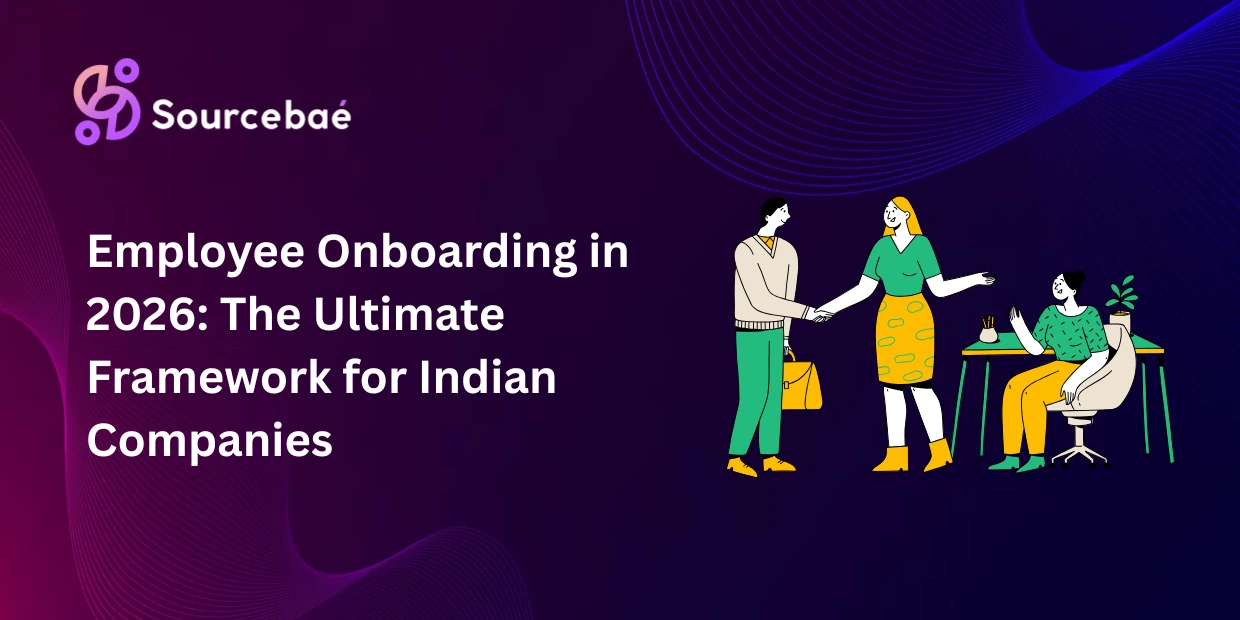

The training for new hires goes beyond just handling paperwork nowadays. As soon as you welcome a new employee to your company, you start a relationship that will affect their whole time there. An effective employee onboarding process can make it much easier for new employees to get to work quickly and, more importantly, keep them with the company for a long time.
The numbers make the case very strong. When companies use best onboarding practices, they keep 82% more of their employees, but when they don’t, 20% of their employees leave within the first 45 days. Indian companies need to do better at training their new employees if they want to keep the best employees in a job market that is becoming more and more competitive.
What is Onboarding?
Onboarding is the process of integrating new employees into a company. It includes the orientation process as well as opportunities for newcomers to grasp the organisation’s structure, culture, vision, mission, and values. Some companies might carry out onboarding in just one or two days, while others may offer a more extensive series of activities that span several months.
Onboarding is often confused with orientation. While orientation is crucial for completing paperwork and handling basic tasks, onboarding encompasses a wider process that involves management and other team members, potentially lasting up to 12 months.
Understanding the Concept of Employee Onboarding: More Than Just Day One
First, let’s just talk about what employee onboarding really means. It is not just the orientation process on the first day or the stack of paperwork that HR gives you. It involves ensuring that a new hire integrates well into your organization and achieves success from day one through to the third month and beyond.
Think of it as three connected stages. During the initial month, new hires are in an educational stage. Between days 31 and 60, they transition into contributing. By the time they reach day 90, they are confidently taking ownership of their roles. A new hire onboarding journey fosters employees who feel appreciated, grasp their responsibilities, and are ready to make an impact right away.
The most effective onboarding practices extend beyond merely fulfilling obligations. They combine compliance needs, cultural assimilation, skill enhancement, and personal relationships elements referred to by experts as the “6 Cs of Onboarding”: Compliance, Clarification, Confidence, Connection, Culture, and Checkback.
Why Your Employee Onboarding Process Matters Now More Than Ever
India’s talent market stands out due to its distinct characteristics. With the rapid growth of the economy, the expectations of the workforce are changing, especially among millennials and Gen Z. There is intense competition for skilled employees, which makes retaining staff a critical issue for businesses. Employees who feel neglected or unappreciated during their initial weeks are significantly more inclined to seek opportunities elsewhere. queros
Here’s what we know about successful onboarding:
- Employees who feel equipped after their onboarding process are 50% more likely to stay with their employer.
- 69% of employees are more inclined to remain with a company for three years if they undergo an excellent onboarding experience. thirst
- Companies with organised onboarding programs have 50% better overall employee retention.
For companies in India, there is a further level of complexity. Your employees are spread out over different locations. You are overseeing teams that are both remote and present in the office. You are dealing with various languages, a range of cultural differences, and differing regulatory demands across regions. A uniform strategy for new employee onboarding is not feasible.
The Complete Talent Onboarding Framework:
Pre-Onboarding: Set the Foundation Before Day One
Most businesses lose candidates between accepting an offer and starting work. This drop-off can be avoided with pre-onboarding.
What to include:
- Welcome email or text with the introduction of the team
- Access to the HR portal and documentation.
- Getting software and hardware ready
- Plans made ahead of time for the first week
- A clear message from the hiring manager
Why is it important:
It clears up any questions, gives people more confidence, and makes sure they are ready.
The First Day: Build Trust, Not Pressure
The objective of Day One is to directly create emotional connections without overwhelming new hires.
Importance:
- A nice welcome from the staff
- A summary of the purpose, vision, and culture of the company.
- A live show or sample of the product.
- Introduction to a “buddy” or mentor
- Simple tasks to enhance comfort
Why it matters:
First-day experiences stick in people’s memories. A positive beginning leads to quicker performance.
The First Week: Enable Productivity Early
This stage clarifies “what constitutes success.”
Include:
- Role responsibilities & performance indicators
- Tool usage & process training
- Observation sessions
- Engaging with primary stakeholders
- Initial small project
Why it matters:
By the conclusion of Week One, a new employee should have a clear understanding of their specific role, duties, and criteria for success.
The First 30 Days: Build Skills + Confidence
The emphasis now transitions from onboarding to performance.
What to include in:
- Taking charge of useful projects.
- A lot of one-on-one talks with the boss.
- Checklists for evaluating performance.
- Modules of training that are made to fit specific skills.
- Giving feedback all the time.
Why is it important:
Employees who get organised comments in their first month are 40% more likely to stay engaged over time.
The First 60 Days: Deep Joining of the Team
This step will make sure that your new employee changes from a passive observer to a proactive participant.
Actions:
- Collaboration across teams
- Involvement in meetings and decision-making
- Genuine KPIs begin to be tracked
- Feedback sessions with peers
- Performance assessments tailored to specific roles
Why it matters:
Integration leads to loyalty. Employees are more likely to remain with the company when they feel embraced from the outset.
The First 90 Days: Look at Growth and Performance
This is the step where job suitability is found.
Components:
- An in-depth look at the first 90 days
- Strengths, flaws, and a plan for training
- Setting goals for the long term
- Talks about moving up in your job
- What the new employee has to say about the training process
Why does it matter:
Strong companies look at how talented people are. Outstanding companies are dedicated to growing their employees.
Continuous Onboarding: Build a Culture of Growth
The onboarding process continues beyond the first 90 days it transitions into employee development.
Long-term steps:
- Quarterly training opportunities to enhance skills
- Rituals that lead to company culture
- Development plans guided by managers
- Availability of learning materials
- Opportunities for internal career movement
Why it matters:
High-performing teams aren’t simply recruited; they are cultivated.
How Sourcebae Helps Companies Build Stronger Teams from Day One
At Sourcebae, we go beyond simply assisting businesses in hiring talent; we facilitate their onboard talent into success. By utilising AI-driven interviews, structured evaluations, and precise role matching, teams can confidently commence the onboarding process with their new hires. This ensures that the onboarding kicks off with a suitable candidate, boosting the overall efficiency of the entire framework.
Common Onboarding Challenges and Strategies for Indian Companies
- Information Overburdened
People who are new to their jobs often have too much to learn and forget a lot of what they know.
Solution: Spread out the lessons over 90 days. Implement microlearning brief, targeted training sessions instead of lengthy lectures. Offer written resources for new hires to refer back to. Utilise an onboarding checklist that clearly outlines completed tasks and what still needs to be done.
- Different Teams have had Different Experiences
Different managers have different ways of onboarding new employees, which makes the experience inconsistent.
Solution: Make a plan for training that all managers can use. Give managers training that focuses on how to do things well. Set up an HR system that keeps track of work and lets you know when important tasks need to be done.. upwork
- Remote and Hybrid Complexity
Virtual onboarding can often seem disconnected and isolating, particularly in India’s hybrid work environment.
Solution: Establish deliberate virtual connection opportunities. Utilise video calls rather than relying solely on email, and organise virtual office tours. Arrange consistent video check-ins and mail out physical welcome packages. Match remote employees with proactive buddies who regularly reach out. employeeonboarding
- Different Languages and Places
Indian businesses often hire people from a wide range of linguistic and geographical groups.
Solution: If needed, offer language help with onboarding papers. Include lessons on being aware of other cultures. Pay attention to how the culture of the workplace varies by location. As much as possible, make sure that the new employee and the buddy who was assigned to them speak the same language.
- Complexity of Compliance
The laws about work in India are very complicated and vary from state to state. It can be hard to stay in line.
Solution: Set up an HR technology tool that is compatible with Indian law. Automate required training sessions. Develop compliance checklists. Collaborate with EOR providers when operating across various states. Ensure that documentation is well-organised and easily accessible.
The Business Case for Investment
Implementing a full talent onboarding strategy costs money, time, maybe even technology, and the training of your HR team and managers. But there is a big return on investment.
From studies, we know the following:
- Companies with good onboarding keep 50% more employees.
- When onboarding goes well, output goes up by 70% or more.
- When onboarding lasts longer than 90 days, retention goes up by 29%.
- By 38%, mentoring groups help people stay in school.
- Employees who are well-inducted are 2.6 times happier with their jobs.
In practical terms, if you hire 50 people a year at an average cost of ₹5-10 lakhs per employee and your turnover rate is 25% in the first year, that’s 12.5 people who will leave, which will cost you ₹62-125 lakhs to replace. You can save 30 to 60 lakhs a year if good onboarding cuts this turnover to 10 per cent. That’s a good reason to put a significant investment into your best practices for onboarding new employees.
Creating Your Company’s Onboarding Framework
Step 1: Evaluate Your Existing Process
Outline your current practices. What aspects are effective? Where do individuals face challenges? Consult recent hires for candid insights.
Step 2: Establish Your Desired Experience
What feelings, knowledge, and skills do you want new hires to have by days 30, 60, and 90? Clearly document these expectations.
Step 3: Create Your Process
Implement the 6 C’s framework and a 30-60-90 day employee onboarding process with HR, manager, and new hire checklist.
Step 4: Determine Ownership
There must be a person responsible for overseeing the onboarding process for new employees. This could be HR, a specific onboarding coordinator, or an interdisciplinary onboarding team.
Step 5: Pick out your tools
Find out if you need a specialised tool or if your current HR system and Google Docs or Spreadsheets will do. Start with a simple method and then add to it as needed.
Step 6: Teach Your Team
Managers and HR staff should be taught the new way to do things. They need to understand what it means and how to put it into action correctly.
Step 7: Look over and improve
Start the training process, ask for feedback, and then make changes. Onboarding is an ongoing process that needs to be improved all the time.
Conclusion: Making Onboarding Your Competitive Advantage
India has a very competitive talent market for people with skills, so great employee onboarding is becoming more and more of a strategic benefit. Companies that are good at this draw the best candidates, keep their best employees, and build teams that do great work.
The comprehensive talent onboarding framework works because it looks at the person as a whole, taking into account their legal obligations, their practical needs (like clear information, training, and tools), their emotional needs (like connections, a sense of belonging, and confidence), and their cultural alignment (like making sure their values and goals are aligned).
When done right, training new hires speeds up their work, makes them more engaged, and increases how long they stay with the company. It shows right away that you care about the growth of your workers.
Whether you’re starting from scratch with your onboarding process or you want to grow in a way that doesn’t harm the environment, remember that your next employee may be changing the future of your company. Make sure that the first 90 days of their job set them up for success.
If you’re prepared to accelerate your growth without compromising onboarding quality, Sourcebae’s end-to-end RPO solution can assist in making talent onboarding smooth, compliant, and consistently outstanding throughout your organization.